
If you’ve noticed icicles hanging from your roof or water stains on your ceiling, you may be dealing with an ice dam. Here in Vermont, ice dams are one of the most common—and costly—winter property issues we see.
The good news? With the right knowledge, you can prevent them, detect them early, and take action before they cause serious damage.
What Is an Ice Dam?
An ice dam forms when heat escaping from your home melts snow on the upper portion of your roof. That water runs down toward the eaves, where the roof is colder (because it extends past the heated interior).
There, it refreezes, forming a ridge of ice along the edge. As more water backs up behind this dam, it can seep under shingles and into your home—damaging ceilings, walls, insulation, and more.
The Physics of Ice Dams
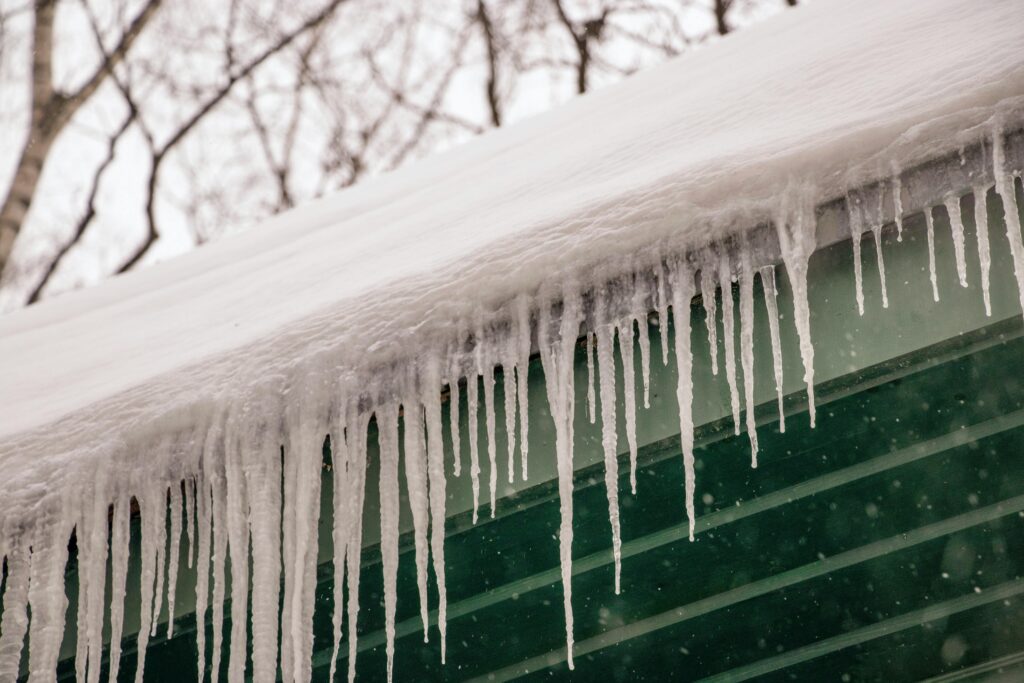
To truly understand how to stop ice dams, you have to understand the thermal dynamics of your roof. In a healthy scenario, your roof temperature is uniform. However, when heat leaks from your living space into the attic, it creates a ‘warm zone’ at the top of the roof. As snow melts in this zone, the liquid water flows down until it reaches the eaves, which are not over a heated space. This temperature drop causes the water to flash-freeze, eventually building a solid wall of ice.
Once that wall is high enough, subsequent meltwater pools behind it. This standing water isn’t just heavy—it’s searching for a way out. Since shingles are designed to shed water moving downward, not water sitting still, the moisture eventually works its way under the shingles and into your home—damaging ceilings, walls, insulation, and more.
The Danger of DIY Removal
Many homeowners are tempted to take a hammer or chisel to the ice. We strongly advise against this. Shingles become brittle in the cold, and even a slight miscalculation can puncture your roof’s protective layer, leading to immediate leaks once the ice melts. If you must remove ice, use calcium chloride ‘pucks’ or professional steam removal services which melt the ice without mechanical force.
Long-Term Prevention: The Building Envelope
Beyond immediate fixes, preventing ice dams is about managing your home’s ‘building envelope.’ This refers to the physical barrier between the conditioned interior and the unconditioned exterior. When this envelope is breached by poorly sealed recessed lights, plumbing stacks, or attic hatches, it creates localized ‘hot spots’ on the roof deck. Even if you have thick insulation, these air leaks can bypass it entirely. A comprehensive approach involves professional air sealing combined with high-performance insulation to ensure your roof deck stays as close to the outdoor temperature as possible.
Signs You May Have an Ice Dam
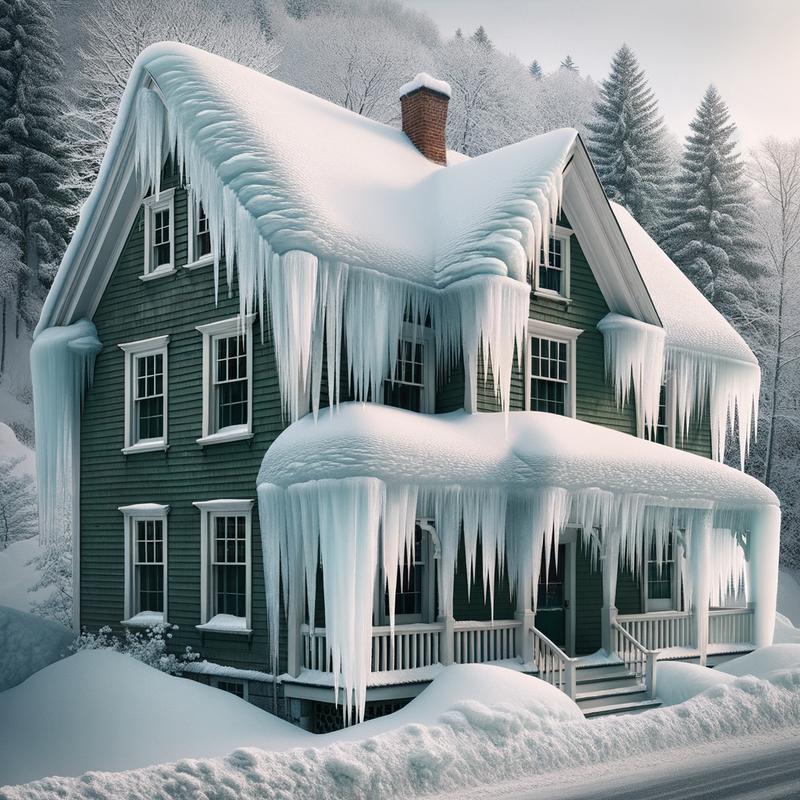
- Icicles forming along the roof edge (a warning sign, though not always harmful on their own)
- Water stains or moisture on ceilings or exterior walls
- Peeling paint near the roofline
- Damp spots in the attic or along the top of interior walls
If you notice any of these, act quickly to prevent further damage.
Prevention: The Best Strategy
The most effective way to deal with ice dams is to prevent them from forming in the first place. Here’s how:
1. Improve Attic Insulation
Proper insulation keeps heat inside your living space—not escaping into the attic where it can warm the roof. Vermont’s cold climate demands R-49 or higher attic insulation for most homes.
2. Seal Air Leaks
Gaps around light fixtures, pipes, chimneys, and attic hatches allow warm air to escape. Sealing these leaks is often the most cost-effective fix.
3. Ensure Adequate Ventilation
A well-ventilated attic stays cold in winter, preventing uneven roof temperatures. Soffit and ridge vents work together to maintain proper airflow.
What to Do If You Already Have an Ice Dam
- Create channels in the ice (carefully) to allow trapped water to drain. A garden hose with warm water can help in a pinch—but be cautious of refreezing.
- Consult a professional if water is actively entering your home. Ice dam removal can be dangerous and may damage shingles if done improperly.
- Document any damage for insurance purposes—photos, dates, and a description of what occurred.
Need Help?
At Full Circle property management team, we work with homeowners, HOA boards, and building owners to identify and address ice dam risks before they become emergencies.
If you’re unsure whether your property is protected, reach out—we’re happy to help you prepare for the rest of winter and beyond.
Image: Pexels